The past lives in the body.
Careful, body-aware trauma work that builds safety first — and revisits what was painful only when you're ready.
Free 15-min · In-person Palo Alto or telehealth ·

Something I've come to understand through years of sitting practice and clinical work: awareness itself is the instrument. Not technique, not interpretation — the quality of attention brought to what is present. When something that has been held in the body meets that quality of attention, something tends to shift. Not because it was forced. Because it was finally witnessed.
Trauma doesn't require excavation. It requires the right conditions. Safety. Slowness. A relationship in which the nervous system can gradually trust that it's safe to let what it's been holding begin to release.
You may not think of yourself as someone with trauma. But some of this might sound familiar:
Certain situations — a tone of voice, a physical sensation, a type of person — activate something in you that seems out of proportion to what's actually happening.
You're hypervigilant in ways you can't fully explain. You scan. You anticipate. You can't fully relax.
There are memories you avoid, or that arrive without warning and take time to recover from.
Intimate relationships trigger responses in you that feel older than the relationship itself.
Your nervous system is running a threat-detection program in situations that aren't actually threatening.
You've built significant distance from certain parts of your history. The distance costs you something.
That distinction sounds technical. It isn't. It means the body is still living in a time that has already passed — still braced, still scanning, still organized around a threat that was real, even when it's no longer present.
Trauma is not stored in narrative. It is stored in the body — in patterns of activation and shutdown, in the reflexive tightening or withdrawal that happens before the mind has a chance to intervene. This is why talk therapy alone, if it moves too fast toward the painful material, often does not help and can occasionally make things worse.
The nervous system needs to feel safe before it can process what wasn't safe.
Depth-oriented trauma work is slow by design. Your nervous system needs a steady relational ground before it can work with what it's been holding. We build that first — in the relationship, over time — so that when we do move toward what was painful, there's somewhere steady to return to. Nothing difficult is approached until you're resourced enough for it to be useful. The goal isn't to relive the past. It's to discharge what was frozen there — so that the past stays in the past, and the present becomes yours again.
“Nothing ever goes away until it teaches us what we need to know.” Pema Chödrön wrote this. It describes something precise: what your nervous system is holding hasn't finished its work. We create the conditions in which it can.
“The wound is the place where the light enters you.”
— RumiThat isn't optimism. It's a clinical observation: what was most avoided often becomes most available — when it has been met with the right kind of attention.
This is the orientation of depth-oriented therapy: not to fix, manage, or optimize — but to understand what has been organized inside, and make contact with it.
“Start close in. Don't take the second step or the third. Start with the first thing close in, the step you don't want to take.”— David Whyte
My trauma approach is informed by polyvagal theory, somatic and body-aware methods, and depth psychology. I do not move toward painful material until the therapeutic relationship is established and your system has developed the capacity to work with what arises.
Memories and triggers lose their grip as the nervous system recognizes they are no longer happening. The present becomes available in a way it wasn't before.
Much of what blocks intimacy is trauma-organized. As that material integrates, the capacity for genuine contact with others often increases.
Chronic tension, hypervigilance, and the exhaustion of running a constant threat-detection program gradually resolve. The body finds its way to safety.
Slow, low-pressure. No expectation to go anywhere you're not ready. We just talk and see if this feels right.
An unhurried intake. Your history, what brings you here, how you make sense of things.
Regular 50-minute sessions, in-person in Palo Alto or via telehealth throughout California.
This is one of the areas I work with in individual therapy.
How individual therapy works →
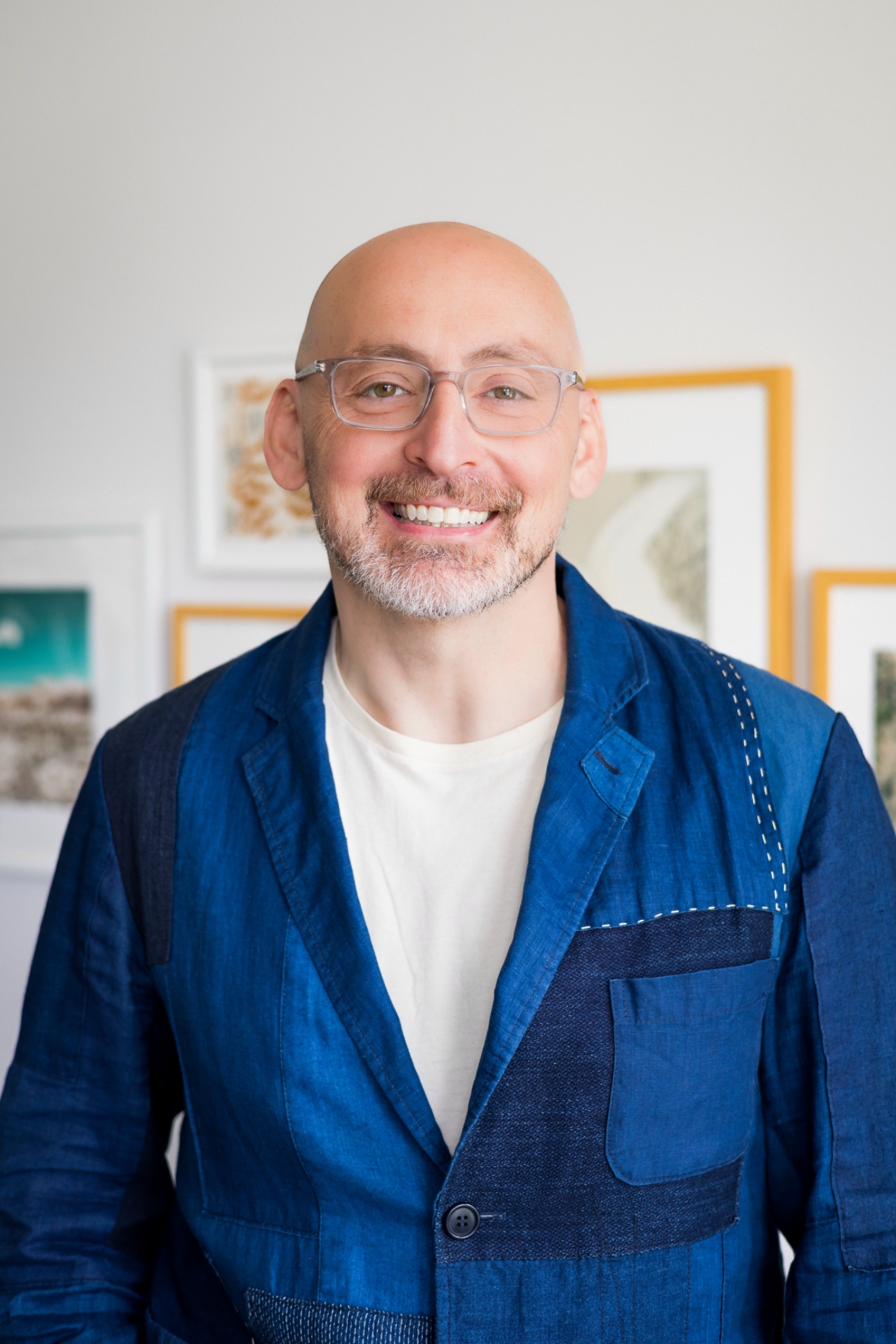
I have personal experience with therapeutic work on early relational trauma, which gives me an embodied understanding of what this process requires — and what it makes possible. I approach trauma work with care and a long time horizon.
Full BiographyOther Areas of Focus
No. Depth-oriented trauma work can proceed without detailed narration of traumatic events. Often, working with the body and the present-moment experience is more useful than reconstructing the story.
Trauma therapy that moves too quickly toward the material often activates the nervous system without resolving it. My approach prioritizes building the relational and somatic foundation first. Slower is often more effective.
My approach is informed by somatic and body-aware methods but is primarily relational and depth-oriented. I'm not formally trained in EMDR or SE as standalone modalities.
Yes. In-network with Aetna, Wellfleet, and Stanford SHIP. Superbills for other PPO plans.
Working with dissociation and overwhelm is part of the work — we don't avoid it, but we also don't push through it. We develop tools for orienting and grounding, and we move at whatever pace your system allows.
Trauma Therapy · Palo Alto
A free 15-minute consultation is a good first step — no commitment.
Start a Conversation